Compare the exact blend, not just the family name
Lyocell-linen and viscose-linen are different purchasing descriptions. Both include linen with another named cellulosic fiber, but the percentages, construction and finish of the selected quality still need to be read. The first word in a catalogue name does not guarantee that it is the majority fiber.
Lenzing explains that its Lyocell process dissolves cellulose directly, while its viscose route uses a different chemical processing route. This is background on fiber terminology, not evidence that a Hanzhong fabric uses Lenzing-branded fiber, has a particular environmental footprint or has been tested by that company. Our catalogue uses the generic name Lyocell; branded-fiber requests require documentation for the actual quality.
Begin with two real apparel references
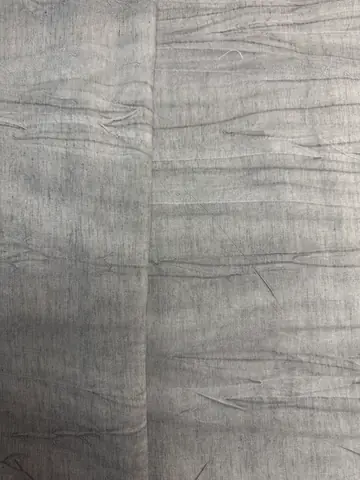
The published HZ-EL-XH-001 specification is 90% Lyocell / 10% linen, 133 GSM, 140 cm stated width and a yarn/density reference of 30×21 / 80×64. The published HZ-LV-XH-001 reference is 85% viscose / 15% linen, 175 GSM, 138 cm stated width and 12×12 / 49×38.
Those are not equivalent constructions with only one fiber changed. Use them as actual choices for an apparel sample round, not as a controlled experiment proving that one fiber always has better drape or softness. Keep the quoted composition, original yarn/density reference and sample finish next to your observations.
Choose the evaluation around the silhouette
For a gathered dress or a skirt, compare how equal-sized samples hang, fold and move. For a blouse, ask the garment maker to review the intended collar, opening and seam construction. For trousers, consider the waistband and seat and request a suitable garment trial. See the trouser and tailoring page for a different starting selection.
Review coverage in the actual shade with the proposed underlayer. A different dye shade, finish or construction can change the result you observe. Neither a fiber name nor a product photograph establishes opacity, crease recovery, seam performance or wash behavior.
Do not treat every Lyocell-linen quality as the same fabric
The Lyocell-linen category contains several published compositions and weights. The linen-viscose category also includes distinct regular and artistic references. Compare each candidate by SKU; similar names or weights should not cause one reference to be substituted without approval.
If your brief uses rayon linen terminology, send the precise fiber composition you require and confirm that the supplier understands the same material. Keep destination-specific labeling requirements as a separate check with the responsible party.
Resolve the questions a swatch cannot answer
Ask whether the sample represents the proposed bulk finish. State the intended care process and any required shrinkage, colorfastness or other testing. Request applicable documents for the selected quality and batch; this guide is not a test report and does not claim one family always shrinks less than the other.
Confirm the usable-width basis before costing the garment. Listed width is not automatically usable cutting width, and GSM does not tell you how many metres a pattern needs. The width and quantity guide explains which inputs to keep separate.
Send a comparison brief the supplier can act on
- Name the two SKUs and the garment being developed.
- Identify the sample colors and proposed finishing condition.
- State whether you need swatches, color cards or cutting lengths.
- Separate sample quantity from forecast bulk quantity per color.
- Give the destination, required date and unresolved test questions.
Sample lengths normally start at one metre; special requirements can be discussed. Sample and courier charges are paid by the customer. In-stock samples can generally be dispatched the same day, while actual availability and preparation depend on the selected product and color. Review the sample policy, then request both comparison references.