Read percentages before comparing product names
Lyocell linen names a blend family, not one fixed recipe. If a purchase brief says only Lyocell linen, a supplier still needs the required percentages or permission to propose alternatives. Keep the composition beside each reference rather than treating a product name as the full specification.
The Hanzhong Lyocell-linen selection includes several distinct qualities. This guide uses two published light fabrics to explain how to prepare a comparison. It does not claim that changing the blend ratio alone creates a particular hand feel or garment result.
Two light references with different percentages
- HZ-EL-XH-001: 90% Lyocell / 10% linen, 133 GSM, 140 cm stated width, construction reference 30×21 / 80×64.
- HZ-EL-XH-003: 75% Lyocell / 25% linen, 128 GSM, 140 cm stated width, construction reference 30×21 / 80×64.
Some listed specification fields match, while composition and weight do not. These are still separate references. Similar published construction does not establish identical finishing, color or behavior in a garment. Ask which finish and shade each supplied sample represents.
If you need a particular fiber percentage, identify whether it is a fixed requirement or a preference. That distinction lets the supplier propose relevant alternatives without quietly changing a non-negotiable part of the brief.
Do not generalize from a light sample to the whole category
Another reference, HZ-EL-XH-008, lists 75% Lyocell / 25% linen but has a 235 GSM weight and 145 cm stated width. A matching percentage does not make it interchangeable with the 128 GSM reference. It needs its own garment and sample review.
This is why a collection brief should name the garment as well as the fibers. A blouse, dress and light jacket can lead to different candidates within the same blend family. Compare the actual construction and reference, not just the material label.
Organize the sample round around one decision
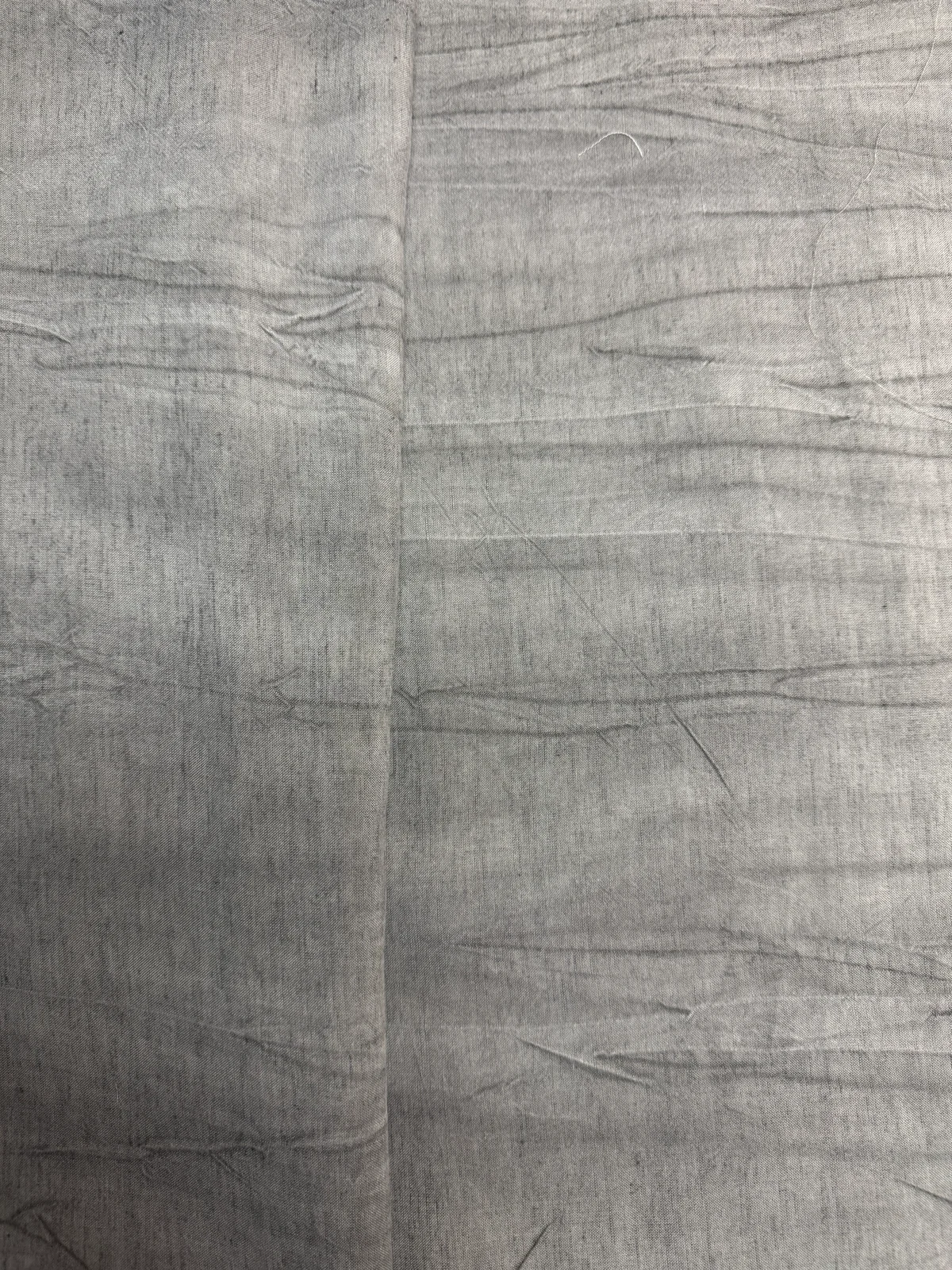
For each sample, record the SKU, percentages, shade, finish, weight and width reference. Use comparable sample sizes and viewing conditions when reviewing movement and coverage. Ask the garment maker to identify any sewing trial needed for the planned silhouette.
If one sample has a different finish, keep that difference visible in the comparison. Do not describe the result as a fiber-ratio experiment. No controlled comparative testing is reported here, and no universal shrinkage or crease-recovery ranking is implied.
The catalogue uses the generic name Lyocell. A branded-fiber requirement must be supported for the actual quality; it is not established by this category name.
Send the alternatives as named references
Request EL001 and EL003 together, stating which composition requirements are fixed, the garment, shades and destination. Sample quantities and bulk quantities should be separate lines.
If the open question is Lyocell-linen versus viscose-linen instead, use the separate blend-family comparison. That is a different selection decision from choosing a percentage and construction inside this category.