Start with the garment's coverage requirement
Whether a fabric is suitable for an unlined garment is a question about a particular sample, color and design. A flat product photograph or a GSM number cannot answer it alone. State whether the fabric is for a shirt, a dress, a lined skirt or a cover-up and describe what the wearer will have underneath.
Our lightweight linen comparison and ramie comparison identify real qualities to sample. The product images are selection references, not a standardized opacity test. This guide does not label any listed shade as opaque or see-through.
Keep the color and sample condition identifiable
Ask for the SKU and color reference of the sample. Record whether it represents the proposed bulk finish. If the exact intended shade is not available for review, note that limitation and avoid transferring a conclusion from another shade without checking it.
For example, HZ-L-XH-002 and HZ-R-XH-001 differ in fiber, weight and construction. A comparison may help choose a garment fabric, but it does not isolate which of those factors caused an observation. Label the references separately.
Prepare a consistent visual comparison
- Review comparable sample sizes rather than comparing a small folded swatch with a single hanging layer.
- Use the intended shade and identify how many layers are shown.
- Review the sample over the proposed underlayer or lining, keeping the setup consistent between candidates.
- Check ordinary indoor light and daylight, noting the setup instead of presenting an image as a measured test result.
- Record what the garment maker still needs to assess in a cutting or sewing trial.
These are practical comparison prompts, not a laboratory procedure or a pass/fail standard. If the project needs a measured optical property, agree an appropriate test and acceptance criterion with a competent laboratory.
Read backlit photos cautiously
A backlit image can show a particular sample under a particular setup. Camera exposure, distance, background, folds and layering can change its appearance. Ask the supplier to identify the sample and explain the setup. Do not treat a brighter photograph as proof that a different fabric has worse coverage.
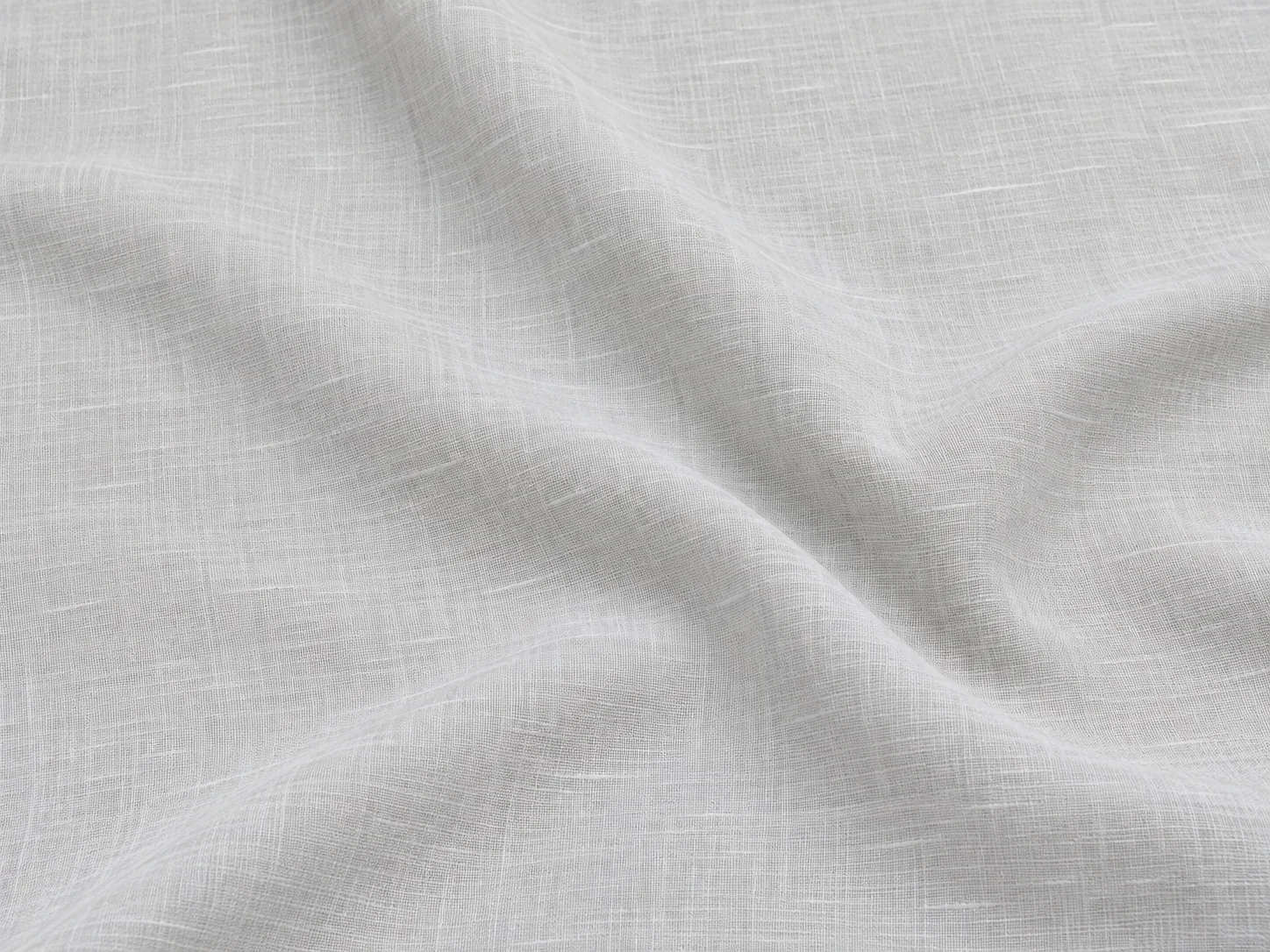
Keep original images with the reference details. An edited or generated comparison is not evidence of the delivered material. The photographs on this guide are ordinary product references; they are not presented as backlit test results.
Decide on lining with the garment maker
Bring the fabric and intended underlayer into the garment-development discussion. Review the actual panels and construction, including areas where the fabric stretches across the body or overlaps. If a lining is being considered, assess the fabric-and-lining combination rather than assuming that any lining will work.
The dress and skirt guide covers the wider selection brief. A resortwear selection may include garments with different coverage needs; do not apply one observation to the whole collection.
Request enough material for the decision
Swatches and color cards support initial selection. A cutting trial may need a longer piece. Hanzhong's sample lengths normally start at one metre; explain special requirements and confirm availability. Sample and courier charges are paid by the customer. Use the sample policy, then request comparison samples with the garment, shade and destination.